


Automation in OEM Application Management: Scaling Deployments Without Scaling Headcount

OEM. Three letters, many interpretations.
In this article, we define Original Equipment Manufacturer (OEMs) as a company that designs, builds, integrates, and delivers a complete machine or production system under its own responsibility and brand. The one that ultimately owns the machine, the software, and the customer relationship.
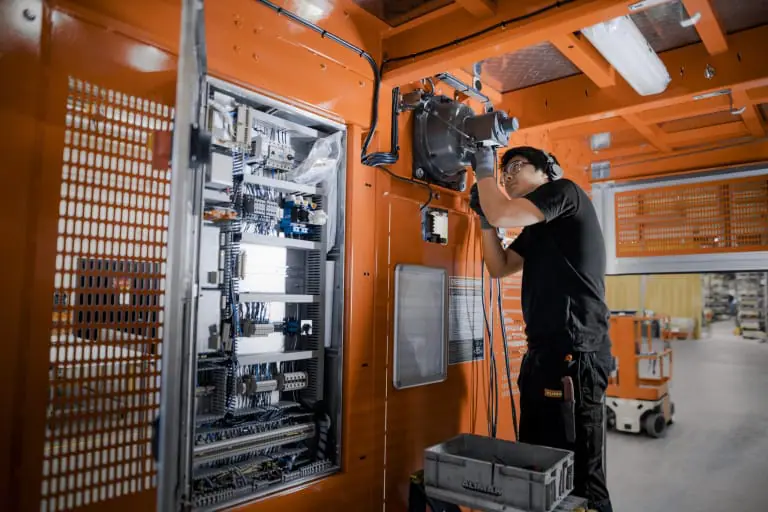
That machine cloud be a shop-floor system, a production line, mining equipment, or specialized industrial machinery. And increasingly, the machine is no longer just a mechanical asset with a PLC attached, rather a layered software system: standard and custom hardware, industrial controllers, third-party components, PLC logic, custom applications, Edge AI workloads, sensor pipelines, and sometimes video processing — all running at the edge.
At the same time, the industry is shifting away from closed, proprietary embedded stacks toward standard compute, soft PLCs, and general-purpose software technologies. This opens the door to faster innovation and more powerful capabilities, but it also changes the operational game entirely.
Feature expectations are rising. Edge AI moves fast. Security regulations like the Cyber Resilience Act (CRA) raise the bar for how updates are built, signed, delivered, and tracked. Suddenly, remote application management is no longer a “nice to have”. It’s table stakes. Customers now expect their machines to improve over time: new features, bug fixes, and security patches delivered over the air, without downtime or truck rolls. For many OEMs, this is where reality hits.
Engineering teams end up spending time building home-grown update mechanisms, remote access solutions, or management tooling — work that adds little customer value and scales poorly. Instead of focusing on machine intelligence and differentiation, teams become platform builders by accident.
Meanwhile, the machines themselves operate in segmented OT networks, often disconnected or tightly firewalled. Temporary VPNs, manual access procedures, and site-specific exceptions might work for a handful of installations, but they break down completely at fleet scale.
This is where automation becomes essential.
Rather than staffing up or reinventing infrastructure, OEMs need purpose-built edge platforms that handle remote application management as a first-class concern. Platforms designed for distributed, constrained, and intermittently connected environments — so engineering teams can focus on what actually differentiates their machines.
In this article, we’ll look at what this means in practice and how OEMs can approach application management at the industrial edge without growing headcount.
Why Traditional OEM Scaling Models No Longer Work
Manufacturing equipment is often still managed largely through manual processes, both by OEMs and by their customers. Software updates often require on-site visits, and troubleshooting, tuning, or configuration changes are handled as ad-hoc manual steps by end customers. While IT automation has advanced rapidly in general, it has yet to fully reach the OT domain. As a result, OEM IT challenges continue to limit agility on both sides.
Advanced OEM solutions should tear down these barriers, not reinforce them. Yet many organizations fall into tool sprawl as they try to compensate: remote access tools, jump hosts, VPNs, custom scripts, and vertical point solutions stitched together to “make it work.” Over time, this approach increases complexity, fragments visibility, and drives up operational overhead — exactly the opposite of what automation is meant to achieve.
In highly distributed environments, especially for OEMs successfully deploying to hundreds or thousands of customer sites, this quickly becomes a blocker for business. Traditional, home-grown solutions simply do not scale with the operational demands of large fleets.
To move forward, OEMs need solutions that enable fully remote, automated application lifecycle management, without requiring a complete re-engineering of their machines or software stack. The next step is not more tools by the number, but a more coherent and scalable operating model for managing software at the industrial edge.
How Automation Transforms OEM Software Management
Before: Manual, Reactive, and Hard to Scale
In a traditional OEM operating model, software management is largely manual and reactive. Equipment is delivered to the customer, but commissioning often requires on-site work or detailed step-by-step instructions. Updates are handled on a case-by-case basis, and configuration differences between customers quickly accumulate.
When vulnerabilities are discovered in the operating system or application stack, responding becomes slow and risky. Updates are often applied manually, without clear visibility into which machines are affected, and without guarantees that maintenance windows or application availability are respected. Maintaining consistent security compliance across the fleet becomes difficult.
Troubleshooting relies heavily on remote access sessions, ad-hoc scripts, and human expertise. Operational visibility is fragmented across tools, and engineering teams are frequently pulled into support activities. As fleets grow, this approach struggles to scale and becomes a core OEM IT challenge.
After: Automated, Predictable, and Built for Scale
With an automated Edge Platform in place, the model changes fundamentally. Equipment is shipped to the customer and brought online with nothing more than power and network connectivity. From the first boot, zero-touch deployment ensures the correct software, configuration, and features are applied automatically.
- Software updates (including OS patches and application upgrades) are rolled out centrally and consistently. Updates respect local maintenance windows, application availability, and customer-specific policies, making security compliance a continuous process rather than a periodic scramble.
- Operational teams gain proactive visibility into fleet health through centralized monitoring and alerting. Issues are identified earlier, analyzed remotely, and resolved through controlled software updates instead of emergency site visits.
- Developers ship fixes through automated CI/CD pipelines, with staged rollouts and canary validation, ensuring safe upgrades across distributed environments. Inventory and configuration records are updated automatically during deployment.
For both OEMs and customers, the result is a shift from reactive firefighting to predictable operations — enabling scale, faster innovation, and improved customer satisfaction without increasing operational headcount.
Buyer’s Guide for OEM Application Management: A 9-step Checklist
If you are selling industrial equipment and want to strengthen your application management capabilities, a few core requirements quickly emerge. At scale, this is less about individual features and more about architectural fit.
- First, the platform should support general-purpose hardware and heterogeneous software stacks. OEMs should not be forced into vendor-proprietary runtimes, tooling, or lock-in that limits long-term flexibility.
- Second, look for remote software lifecycle management that is built in from the start. This includes installing, upgrading, monitoring, rolling back, and uninstalling applications across a distributed fleet, without manual intervention.
- Security cannot be bolted on. Intrinsic security is a hard requirement for any OEM today, covering identity, access control, secure update mechanisms, and audit-ability as part of normal operations.
- Connectivity is another critical constraint. The platform must operate flawlessly without relying on VPNs or inbound firewall openings, and be designed to work across ISA-95–segmented OT networks using outbound, policy-controlled communication.
- Application workloads should be treated as a first-class concern. Networking, ingress configuration, certificates, secrets, volumes, and other dependencies, therefore, need to be centrally managed and versioned alongside the application itself, not handled as manual, site-specific setup.
- Real-world environments are unreliable, so the system must handle low bandwidth, intermittent connectivity, and long disconnections gracefully, without operational degradation. At the same time, applications must remain fully autonomous within the customer’s on-premise environment. Availability shouldn’t depend on continuous cloud connectivity, restarts, rescheduling, or local recovery must work even in complete isolation.
- OEMs also need remote monitoring and troubleshooting capabilities to diagnose issues, assess fleet health, and support customers without on-site visits.
- Multi-tenancy is often essential. Different organizations — and sometimes end customers — must be able to access and operate a defined subset of machines with ease, and with clearly scoped permissions and responsibilities.
- Finally, the platform must be API-driven to enable integration with the OEM’s broader solution stack, including CI/CD pipelines, support tooling, customer portals, and business systems.
Together, these requirements define what “application management” really means for modern OEMs, not as a collection of tools, but as a foundational capability for operating software-defined machines at scale.
Real Business Benefits of Automation
An automated, centralized application management platform allows OEMs to scale to tens of thousands of deployed machines without increasing operational complexity. Standardized deployment and lifecycle management replace site-specific processes, enabling predictable growth without linear increases in staff or tooling.
By automating deployment, updates, and troubleshooting, OEMs significantly reduce the per-deployment operational cost. Fewer on-site visits, fewer manual interventions, and less custom engineering translate directly into lower support costs and more efficient use of engineering resources.
Built-in controls, monitoring, and auditability improve uptime and reduce operational and compliance risk. Security updates are applied consistently, issues are detected earlier, and compliance requirements are met as part of normal operations rather than as reactive efforts.
Most importantly, this foundation enables new business models. With reliable remote management and lifecycle control in place, OEMs can deliver software-driven capabilities and equipment-as-a-service, supporting subscriptions, continuous upgrades, and recurring revenue — without increasing operational overhead.
Examples of Automated OEM at Scale
We work with a number of OEM partners who have successfully adopted automated application management to operate and scale their solutions.
- FlashEye transformed its on-site LiDAR solution into a service-based offering. By enabling remote monitoring, software upgrades, and lifecycle management, FlashEye can continuously improve deployed systems while reducing the need for on-site intervention.
- Host Mobility partnered with Avassa to bring containerized application management to their tailored edge hardware solution. This collaboration enables host mobility providers to run, update, and monitor applications on specialized edge devices at scale, while simplifying operational overhead and improving uptime for distributed systems.
- Fiftytwo uses centralized, automated deployments to manage large fleets of in-store POS systems. This allows their remote operations team to deploy updates consistently, detect issues early, and troubleshoot faster, significantly improving operational efficiency across distributed retail environments.
- Together, Avassa and OnLogic provide a combined hardware and software foundation for OEMs. By delivering pre-integrated industrial hardware with a purpose-built edge application management platform, OEMs can simplify deployment, accelerate time-to-market, and operate modern software-defined machines at scale.
Read more on the Avassa offering for industrial solutions.
Conclusion: From Operational Burden to Strategic Advantage
For OEMs, software has become a defining part of the product, and how it is managed increasingly determines whether the business can scale. Manual processes, fragmented tooling, and site-by-site operations are no longer just technical inconveniences; they directly constrain growth, margins, and customer satisfaction.
Automation changes this equation. By treating application management as a core capability rather than an afterthought, OEMs can move from reactive operations to a predictable, scalable operating model. One that supports rapid innovation, consistent security compliance, and reliable uptime across large, distributed fleets — without increasing operational headcount.
Just as importantly, automated application management shifts software from a cost center to a strategic asset. It enables continuous delivery of value after installation, supports service-based business models, and creates the foundation for long-term customer relationships built on recurring revenue rather than one-time deliveries.
The OEMs that succeed in the next phase of industrial digitization will not be those that build the most custom tooling, but those that standardize how software is deployed, operated, and evolved at the edge. Automation is no longer about efficiency alone, it’s about competitiveness, resilience, and sustainable growth.
Frequently Asked Questions
What is OEM application management?
OEM application management is the ability to centrally deploy, update, monitor, and secure software running on customer-installed machines across their full lifecycle. It enables OEMs to operate large, distributed fleets reliably, meet security requirements, and deliver continuous value without manual intervention or increased headcount.
How does automation help OEM software management?
Automation removes manual steps from deploying, updating, and operating software on distributed machines. It enables consistent, zero-touch deployment, centralized monitoring, and controlled updates at scale, reducing operational cost while improving uptime, security, and compliance across OEM fleets.
What are common challenges in scaling OEM operations?
Common challenges in scaling OEM operations include manual deployment processes, fragmented tooling, limited visibility across distributed sites, and difficulty maintaining security and compliance at scale. As fleets grow, these issues drive up operational cost, increase risk, and strain engineering and support teams, making traditional approaches hard to sustain.
What features should an OEM operations platform include?
An OEM operations platform should support zero-touch deployment, centralized software lifecycle management, intrinsic security, and operation across segmented OT networks without VPNs. It must handle unreliable connectivity, provide remote monitoring and troubleshooting, support multi-tenancy, and expose APIs for integration. See the article above for the full set of requirements and details.
Why scale deployments without increasing headcount?
Scaling deployments without increasing headcount allows OEMs to grow profitably. Automation reduces manual work, lowers operational cost per machine, and prevents support and engineering teams from becoming bottlenecks, enabling sustainable growth, predictable operations, and better margins as fleets expand.
What’s the difference between traditional IT scaling and automated OEM application scaling?
Traditional IT scaling assumes stable connectivity, centralized infrastructure, and manual intervention when issues arise. Automated OEM application scaling is designed for distributed, customer-owned environments, using zero-touch deployment, autonomous edge operation, and centralized lifecycle management to scale fleets reliably across thousands of sites without increasing operational complexity.
What is the difference between a traditional IoT platform and a OEM software management platform?
A traditional IoT platform is primarily focused on connecting devices, collecting telemetry, and managing data flows to the cloud. Its core strengths are device onboarding, messaging, data ingestion, dashboards, and analytics. Software updates and operations are often limited, device-centric, or handled as add-ons.
An OEM software automation platform, by contrast, is focused on operating software at scale on customer-installed equipment. It manages the full application lifecycle across distributed, often disconnected OT environments. The goal is not just to observe devices, but to reliably run, evolve, and secure complex software systems at the edge.
In short: IoT platforms manage data from devices. OEM software automation platforms manage software running on machines — at fleet scale and as a core operational capability.